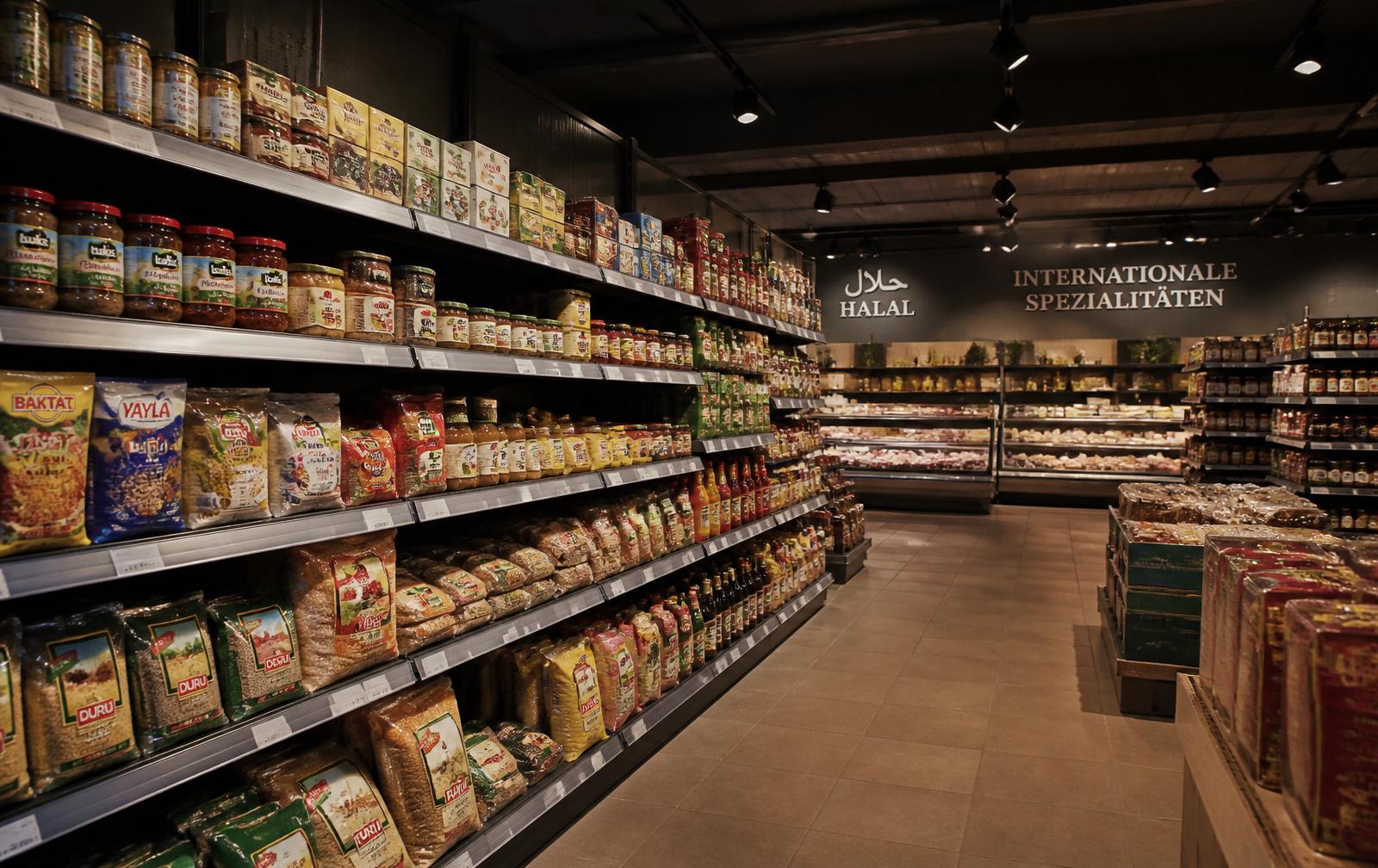
Ethnic Food Gains Strategic Relevance in German Retail
The strongest indication of category growth is not a single market-size estimate. It is the organisational investment now being made by mainstream retailers.
Germany's ethnic food market is increasingly moving beyond its traditional specialist channels.
Turkish, Eastern European, Balkan, Arab and Asian products remain deeply rooted in independent supermarkets and specialist wholesale structures. However, mainstream retailers are now treating these categories with greater organisational and commercial attention.
A recent report by Lebensmittel Zeitung states that EDEKA has strengthened the responsibility for beverage and ethnic-food procurement at purchasing-management level. According to the report, additional buying expertise is being developed for Eastern European and Turkish food products, covering both established brands and private-label products.
The objective is not limited to occasional international promotions. The reported intention is to introduce a broader assortment onto EDEKA retail floors.
An official EDEKA recruitment notice supports this development. The retailer is seeking a dedicated buyer for ethnic food with a focus on Turkish products. The responsibilities include assortment development, market and competitor analysis, supplier negotiations, tastings, national promotions and the presentation of category strategies to EDEKA's regional organisations and Netto Marken-Discount.
This is commercially more meaningful than a temporary trend campaign. It shows that ethnic food is becoming a category-management topic.
The Bundesvereinigung der Deutschen Ernährungsindustrie has described a similar structural development. Products that were previously associated mainly with specialist stores are increasingly becoming part of everyday German grocery retail.
The organisation points to several examples of category-specific growth. Eastern European food specialist Dovgan reported a significant increase in sales in 2024. Korean-product sales at importer Kreyenhop & Kluge more than doubled between 2022 and 2024, while German-based dumpling manufacturer CJ Mainfrost has also reported strong annual growth.
These examples should not be treated as a single consolidated growth rate for the entire ethnic-food market. The market is not homogeneous. Turkish dairy products, Eastern European frozen foods, Korean convenience products and Halal meat each have different consumers, channels, margin structures and competitive dynamics.
Nevertheless, the direction is clear: demand, distribution and institutional interest are expanding.
What changes when the category enters mainstream retail?
- 01
Procurement becomes more professionalised
Suppliers will increasingly face structured tenders, national conditions, category reviews, performance reporting and formal supplier requirements.
- 02
Private label becomes more important
Mainstream retailers are unlikely to rely exclusively on imported branded products. As category volumes grow, retailer-owned products and exclusive concepts become more commercially attractive.
- 03
Assortment decisions become more data-driven
Brand awareness within an individual community may no longer be sufficient. Suppliers will need credible sales data, regional demand analysis, reliable availability and clearer evidence of product rotation.
- 04
Competition moves beyond the specialist channel
Traditional ethnic wholesalers may increasingly compete not only with each other, but also with mainstream buying organisations, food-service distributors and internationally backed consolidators.
- 05
Volume growth does not automatically mean margin growth
Listings in mainstream retail can increase turnover, but they may also create additional promotional spending, listing costs, logistics requirements, payment-term exposure and retailer bargaining power.
Sources
Lebensmittel Zeitung
Ethno-Food wird für Edeka wichtiger ↗Bundesvereinigung der Deutschen Ernährungsindustrie
Ethnofood in Deutschland: Vom Spezialmarkt zum festen Bestandteil der Lebensmittelwirtschaft ↗EDEKA Careers
Einkäufer / Buyer Ethnic Food – Türkische Lebensmittel ↗
This publication is provided for general information and does not constitute investment, legal, tax or transaction advice.
Related updates
Investor Lens
Growth at Any Price?
Why rapid market-share gains, anchor-brand dependency and aggressive private-label expansion can create hidden quality-of-earnings risks.
Investor Lens
Ownership Is Not Management
What the Gürkan Pastırma case reveals about succession, professional management and the transferability of an ethnic food brand.
Meridian · Confidential Engagement
Assessing an ethnic or Halal food category, distributor or transaction?
MERIDIAN provides confidential market intelligence, competitor mapping, commercial due diligence and route-to-market analysis for investors and commercial decision-makers.
Request a Confidential Assessment